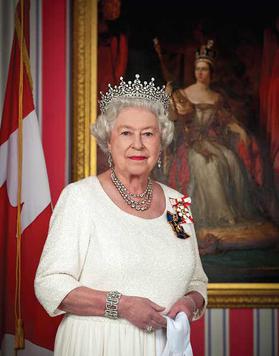
Friday, 27 May 2016

Missed Deadlines and the Future of Collective Bargaining in the RCMP

(This post will also be posted to the Usask Law Blog.)

Bill C-7, An Act to amend the Public Service Labour Relations Act, the Public Service Labour Relations and Employment Board Act and other Acts and to provide for certain other measures, is the federal government's response to last year's decision in Mounted Police Association of Ontario v. Canada, where the existing labour relations scheme for RCMP members (and the absolute exclusion of RCMP members from unionizing under the Public Service Labour Relations Act, of which they would otherwise be able to avail themselves) had been declared unconstitutional. Bill C-7 tries to bring RCMP members under the PSLRA, but with significant procedural and substantive differences in how that Act applies to RCMP members vs. other public servants.

(It also seems to change the name from the PSLRA to the Federal Public Sector Labour Relations Act for some reason, possibly because the government sees the RCMP as part of the federal public sector without truly being part of the public service?)

Bill C-7 is currently before the Senate but has not yet been proclaimed into law. This means that the federal government has now missed the (extended) deadline set by the Supreme Court, the upshot of which is that right now RCMP members lack a collective voice with which to deal with management., because the unconstitutional Staff Relations Program (which was a management-controlled venue which previuously allowed RCMP officers collectively to raise concerns, and didn't have sufficient independence to pass constitutional muster) has been disbanded, and Bill C-7 has not yet been proclaimed to replace the SRP with something else.

Quick! Bring a Certification Application!

It's a bit of an odd situation. RCMP members couldn't unionize under the Public Service Labour Relations Act because they were excluded from the statutory definition of "employee" under that Act (and only "employees" can certify a bargaining agent under the PSLRA, just like other labour relations statutes in Canada.)

The statutory exclusion was struck down in Mounted Police Association in 2015, and the deadline to introduce new legislation has passed. That means that in the interim,  RCMP members are technically now "employees" (without restriction) under the PSLRA, and able to exercise their rights to unionize thereunder with any union they please (subject to the usual requirements of delineating an appropriate bargaining unit, proving majority support within that unit, and so on).

As Michael Mac Neil of Carleton Univerity wryly tweeted:

Of course a union would probably be foolish to do so; bill C-7 will likely be proclaimed shortly. (And the Mounted Police Association of Ontario, at least, states it's "eagerly awaiting" the new legislative framework, which doesn't suggest an appetite to upset the applecart by filing for certification right now.)

Further, the amended Federal Public Sector Labour Relations Act sets out that there will be a single bargaining unit, covering all RCMP members and reservists in Canada, and that such a bargaining unit is the only possible bargaining unit under the Act.

238.‍13 (1) Subject to section 55, an employee organization within the meaning of paragraph (b) of the definition employee organization in subsection 2(1) that seeks to be certified as the bargaining agent for the group that consists exclusively of all the employees who are RCMP members and all the employees who are reservists may apply to the Board, in accordance with the regulations, for certification as bargaining agent for that group. The Board must notify the employer of the application without delay.

The Act further sets out that the bargaining agent - i.e. union - that represents the RCMP members can't represent any other bargaining unit (s. 238.15), and the bargaining unit can't include anyone other than RCMP members and reservists (s. 238.16).

In other words, while RCMP members can select their bargaining agent (in Mounted Police Association there were three associations seeking representation rights, one based in B.C., one in Ontario, and one in Quebec, so there may be some competition for that role), they all have to select the same one, and that bargaining agent can only represent the RCMP. So, we won't be seeing the United Steelworkers or United Food and Commercial Workers representing RCMP members any time soon.

Choice in bargaining agent notwithstanding, it's quite similar to "designated bargaining agent" labour relations models, such as those designating unions for teachers and nurses. But the practical effect is that any pre-existing union, even if successful, couldn’t maintain representation rights after the passage of the new Act.

So practically speaking, RCMP members are collectively without representation until Bill C-7 is passed; when it will be passed depends on the Senate's schedule. But should the government take too long in implementing the new regime, I wonder if one of the staff associations involved in the appeal in Mounted Police Association would take matters into its own hands and apply for certification for a group of RCMP members, if only to encourage the government to move things along?

(I'll answer my own question: No, they probably wouldn't, for the reasons already given.)

Bill C-7's Restrictions on Collective Bargaining

Bill C-7 hasn't been uncontroversial; there are still provisions, unsurprisingly unpopular with RCMP members, that strictly limit what any prospective RCMP union will be able to negotiate for its members.

Specifically, s. 238.19 of the new Act states:

238.‍19A collective agreement that applies to the bargaining unit determined under section 238.‍14 must not, directly or indirectly, alter or eliminate any existing term or condition of employment or establish any new term or condition of employment if
(a) doing so would require the enactment or amendment of any legislation by Parliament, except for the purpose of appropriating money required for the implementation of the term or condition;
(b) the term or condition is one that has been or may be established under the Royal Canadian Mounted Police Superannuation Act, the Royal Canadian Mounted Police Pension Continuation Act, the Public Service Employment Act, the Public Service Superannuation Act or the Government Employees Compensation Act; or
(c) the term or condition relates to
(i) law enforcement techniques,
(ii) transfers from one position to another and appointments,
(iii) appraisals,
(iv) probation,
(v) discharges or demotions,
(vi) conduct, including harassment,
(vii) the basic requirements for carrying out the duties of an RCMP member or a reservist, or
(viii) the uniform, order of dress, equipment or medals of the Royal Canadian Mounted Police.
So: no negotiation over pensions (governed by the federal superannuation and pension acts), nor wages if the government (as it did in Meredith) sets, by statute or regulation, what wages will be. No negotation over probation periods, performance appraisals, or discharge or demotion procedure. (Would that mean that negotiating a grievance procedure under which discharge or demotion could be challenged is also off the table?) No negotiation regarding duties or conduct while on the job. Frankly, it's difficult to see what substantive areas are left for an RCMP union to negotiate.


The RCMP itself has portrayed these changes as ensuring that RCMP members can "exercise their Charter-protected freedoms, including freedom of association," but I think these restrictions raise the question of whether the new Act prevents "meaningful collective bargaining", in the sense used by the Supreme Court in B.C. Health Services in 2007 and in Mounted Police Association, Meredith v. Canada, and Saskatchewan Federation of Labour in 2015. In Meredith a rollback of negotiated wage increases was not unconstitutional, but this Act prevents both present and future negotiations on a whole host of issues. Job security, wages, pensions, the ability to challenge whether your dismissal was for just cause, having some say in the employer's ability to transfer employees from one workplace or job to another...these are important issues that many unions negotiate hard for. To have them taken off the table entirely seems to leave any RCMP union the ability to nibble around the edges of its members' terms and conditions of employment, but leaves it without much actual clout. In other words RCMP members may be able to exercise sufficient choice in selecting their union, and their union may have sufficient independence from the employer, to satisfy the (quite basic) requirements set out by the Supreme Court in Mounted Police Association.

But whether the union could actually engage in "meaningful collective bargaining" is another issue. One of the reasons the health sector legislation passed by the B.C. Liberals was struck down in B.C. Health Services was because the legislation not only made significant changes to negotiated terms and conditions of employment; it also prevented any negotiation between health care unions and health care employers regarding those, and other, contractual terms.

It's worth noting that the B.C. Liberal government is facing another Charter challenge which is heading to the Supreme Court of Canada, this time regarding a prohibition on negotiating class sizes in the public school system. It's a similar issue, though to a lesser degree - to what extent can a government limit the ambit of collective bargaining without running afoul of s. 2(d)'s guarantee of freedom of association? (Mind you, no Canadian government has gone as far as Scott Walker's Republican administration in Wisconsin, which limited collective bargaining in the public sector only to wages - and any wage increases were then capped to the Consumer Price Index, at that - but there is still significant uncertainty about just how far a government can go.)

I would not be surprised if the courts haven't seen the last of the RCMP unionization saga.


Thursday, 26 May 2016

Check out the Usask Law Blog!


The University of Saskatchewan College of Law now has an official blog, which I think is a great move. I'm hopeful that under the benevolent (?) leadership of Professor Michael Plaxton, graduate students and faculty will find it a useful outlet for the writing-but-not-quite-enough-for-an-article-writing urge.

Check it out at Usask Law Blog!

(I will be cross-posting whatever I post there here as well, for what it's worth.)

Thursday, 31 December 2015

2015 Roundup: What a Year it's Been


There are, needless to say, an enormous number of stories and cases that come out in a given year. I don't intend to even attempt to give a thorough or fulsome "year in review" here, but I would like to revisit some of the things I've posted about in 2015.

Essential Services Legislation

In labour law, the year started off with a bang when the Supreme Court released Mounted Police Association of Ontario v. Canada (Attorney General) (which declared that workers have a right to join an independent union), Meredith v. Canada (Attorney-General) (which upheld a government-imposed rollback on wage increases for RCMP officers), and Saskatchewan Federation of Labour v. Saskatchewan (which recognized that workers have a constitutional right to strike and struck down Saskatchewan's essential services law). It's still not clear what impact these cases will have in the long term, though Alberta, at least, engaged in consultation on a new essential services law in October, to bring its law in line with the standards set out in Saskatchewan Federation of Labour.

The Saskatchewan government also introduced amendments to The Public Service Essential Services Act (the Act which had been struck down in Saskatchewan Federation of Labour) which have since been passed by the Legislature (though the new legislation isn't yet in effect). The Saskatchewan Federation of Labour seems to approve of the new law. A summary by employer-side law firm Macpherson Leslie & Tyerman is here; union-side lawyer Greg Fingas discusses the new law here. Perhaps the best summary, though, is this tweet from Eric Adams at the University of Alberta:


That said, MPAO, Meredith, and Saskatchewan Federation of Labour were really just completing the legal journey that began in 2007 with the B.C. Health Services case, and B.C. Health Services, while undoubtedly significant, didn't send Canadian labour relations flying arse-over-teakettle. But unions are undoubtedly more assertive in challenging labour legislation in court; unions in Nova Scotia, for instance, will be launching a Charter challenge against the recently-passed Bill 148, The Public Services Sustainability (2015) Act, which restricts, among other things, wage increases in the public sector. We can expect further challenges to labour legislation, but I suspect (as I've said before) that the overall impact of the 2015 cases will be relatively modest.

Alberta: Bill 6

2015 ended with a bang, too, with much furor (including, apparently, death threats aimed at Premier Rachel Notley) over Alberta's Bill 6, The Enhanced Protection for Farm and Ranch Workers Act, which extends to paid farm workers similar protections as other workers under workplace legislation: occupational health & safety, workers' compensation, labour relations, and labour standards. Bill 6 recently received royal assent on December 11, 2015, but with the significant amendment that the new protections found in Bill 6 will no longer apply to family members or unpaid workers.

(As an aside, I posted a while back about Bill 6 and that post got some traffic from a forum where people were discussing the Bill. The question of OH&S and WCB coverage for farm workers in Saskatchewan came up. Someone kindly posted a link to this blog as a source of information, but with the comment that "...but it's not very clear." A  humbling reminder.)

You said it, inspiremybusiness.com.au.
 
As the Alberta Government's website states:

Who’s affected

Alberta farm and ranch producers with paid employees who are not the owner or related to the owner will be affected by Bill 6.

This means that family members can continue to contribute to farming operations as they always have, and neighbours can still volunteer to help each other out
Still, paid farm workers in Alberta will now probably have the most extensive protections of any jurisdiction in the country. (Though this will still be subject to regulations - which might limit the application of some provisions on farms.) As I mentioned back in November, in Saskatchewan we don't have mandatory WCB coverage for farms, nor are farm workers entitled to many labour standards. Ontario farm workers (including fruit pickers) can't unionize effectively under the misleadingly-titled Agricultural Employees' Protection Act. So it will be interesting to see how Bill 6 develops in 2016 as the Alberta government crafts its regulations.


Federally: Bill C-377 and Bill C-525

Federally, the new Liberal government has blocked, and has promised to repeal, the intrusive (and likely unconstitutional) Bill C-377, which would have required unions to disclose publically (not just to their members) employee salaries, donations to political and social causes, contracts with businesses or other organizations, amounts spent on legal fees and strike support...the list goes on. Bill C-377 was, like the Conservatives' pointless fight over niqabs at citizenship ceremonies, a mean-spirited jab at people and groups that the Conservatives seemed to feel were good political targets. And like the niqab ban, it had effectively no practical value beyond, I suppose, rallying the Conservative base. Professor Adams, again, suggested that the legislation ran afoul of the division of powers between the federal and provincial governments (it's ostensibly a tax measure - federal jurisdiction - but intrudes into the regulation of all unions regardless of jurisdiction); others have suggested that it will undermine solicitor-client privilege (since unions would have to disclose legal fees and, likely, legal representation), infringe upon the privacy of union employees and those dealing with unions, and violate the Charter protections of freedom of association and freedom of expression. Prof. David Doorey pointed out that it singled out unions for greater and more detailed financial disclosure (and, again, public disclosure) than other organizations such as charities. Bill C-377 is a bloody mess, legally, practically, and constitutionally, and should have died the usual ignominious death of a private member's bill. Thankfully, it's on the way out.

Bill C-525, which would have made it harder to unionize (and easier to decertify, i.e. de-unionize) for employees under federal jurisdiction, is also on the chopping block.

Locally: Saskatoon Transit

But in Saskatoon, the dramatic labour dispute between city transit workers and the City of Saskatoon (said dispute being the impetus to start this here blog) ended the year not with a bang, but with (kind of) a whimper: the City of Saskatoon and Amalgamated Transit Workers Union, Local 615, came to an agreement on the compensation owed to the workers who had been illegally locked out. But they still haven't agreed on a contract.

And on a non-labour-related note:

Trinity Western University

Meanwhile, Trinity Western University's quest for a law school continues. In January, the Nova Scotia Supreme Court declared that the Nova Scotia Barristers' Society could not deny accreditation to graduates of a TWU law school. That decision is currently under appeal. Then, in July, the Ontario Divisional Court upheld the Law Society of Upper Canada's decision not to approve accreditation for any law school at TWU unless and until TWU revokes its "Community Covenant" (at least as far as law students would be concerned). That's currently under appeal, too.

Then, a couple of weeks ago, the B.C. Supreme Court quashed the decision of the Law Society of B.C. to refuse accreditation to TWU law grads. No word yet from the Law Society on whether it will appeal.

Regardless, it seems likely that TWU's journey will be to the Supreme Court - again - especially if the various Courts of Appeal come to contradictory conclusions.

And that's it! A brief and limited, but hopefully interesting, year roundup. I didn't get a chance to use Anti-Union Ogre in this post, sadly, so I'll have to settle for this.

Thursday, 3 December 2015

Citizenship and Disavowal: the Canadian Citizenship Oath

In 1989, I took the citizenship oath and became a Canadian citizen. The oath hasn't changed much, if at all, since then. Here it is:

I swear (or affirm) that I will be faithful and bear true allegiance to Her Majesty Queen Elizabeth II, Queen of Canada, Her Heirs and Successors, and that I will faithfully observe the laws of Canada and fulfil my duties as a Canadian citizen.
I admit, it didn't feel like that big a deal to me. I'd lived in Canada for fifteen of my seventeen years or so at that point; my accent was long gone; and I didn't remember Scotland at all, since I was about two-and-a-half when my parents moved back to Canada. Taking the oath was affirming what I already knew: that I was, for all intents and purposes, Canadian (albeit with an odd predilection for the pipes-and-drums).

(I saw the Maybole Pipe Band at Culzean Castle a couple of years ago. They were great. (From maybolepipeband.com))

I certainly wasn't keen on the monarchy, archaic and outmoded institution that it is, and affirming my allegiance to Queen Elizabeth II - even in her role as Queen of Canada, rather than Queen of the United Kingdom - rankled. I did take the oath, however. It wasn't a political or ideological hill I was going to die on at seventeen and, frankly, as a Canadian-in-all-but-the-paperwork by that stage, I'd long since accepted the anachronistic figurehead of my country. So I gritted my teeth, pledged my allegiance to Good Queen Bess, and became an official Canadian, no foolin'.

No hard feelings, I hope, Your Majesty. (wikipedia.org)

The citizenship oath made the news during the recent federal election, of course, in the case of Zunera Ishaq, and owing to the Conservative government's bone-headed decision to pander to Islamophobes. That issue, thankfully, appears to have been resolved and Ms. Ishaq was able to become a citizen. She, notably, took no issue with the oath itself; merely the requirement that she uncover her face while taking it.

Recently, though, the Oath made news again when Dror Bar-Natan, an immigrant from Israel, publicly recanted the portion of his citizenship oath that related to the Queen.In fact he's gone so far as to start up a website for those who wish to disavow that portion of their oath that refers to the Queen.

We at disavowal.ca have no qualms regarding the second part of the oath, about the laws and the duties. The first and slightly longer part, about the monarchy, we find bitter to swallow, each for her or his own reasons. Hence each of us disavowed that part, in one way or another.

Dr. Bar-Natan specifically stated to the citizenship judge after completing the citizenship ceremony (according to disavowal.ca): 
I affirm my allegiance, my true allegiance, to Canada and to the people of Canada, yet I wish to disavow the royalty part, and only the royalty part, of the citizenship oath.

This, by the way, is perfectly legal. You can't gain citizenship without saying the oath. But you don't lose your citizenship if you, as Dr. Bar-Natan did, immediately recant that portion of your oath. (See e.g. McAteer v. Canada (Attorney-General), 2014 ONCA 578 (CanLII) at paras. 78-79. You can, in essence, take the oath with your fingers crossed. And then post on disavowal.ca.


Now, if I may quote Wikipedia here (the very thing I tell my students not to do), the Queen of Canada:

As the sovereign...is, legally and constitutionally, the personification of the Canadian state.
(Though see the comments of Professor Philippe Lagasse, below - it's not quite as simple as that, perhaps.)

And that's the line, more or less, that the courts have taken. You're not really swearing allegiance to a monarch, as such, you're swearing allegiance to our constitutional state. That the state is personified by the monarch is simply set out in our Constitution. If we wanted to become a republic and ditch the monarchy, we could do that. As the majority of the Federal Court of Appeal in Roach (1994) stated:

Against this constitutional background, the oath of allegiance has to be understood to be binding in the same way as the rest of the Constitution of Canada not forever, nor in some inherent way, but only so long as the Constitution is unamended in that respect...The fact that the oath "personalizes" one particular constitutional provision has no constitutional relevance, since that personalization is derived from the Constitution itself.

The Ontario Court of Appeal in McAteer has also taken the position that any oath to uphold the laws of Canada implicitly means allegiance to the Queen and, therefore, a more generic oath would still have the same effect:
Because the Queen remains the head of our government, any oath that commits the would-be citizen to the principles of Canada’s government is implicitly an oath to the Queen. 
The courts, generally speaking, seem to approach this as self-evident; that those who complain about the monarchist portion of the oath misunderstand the oath; that such objections are somehow unreasonable. McAteer, again:

The appellants’ arguments are based on a literal “plain meaning” interpretation of the oath to the Queen in her personal capacity. Adopting the purposive approach to interpretation mandated by the Supreme Court of Canada, leads to the conclusion that their interpretation is incorrect because it is inconsistent with the history, purpose and intention behind the oath. The oath in the Act is remarkably similar to the oath required of members of Parliament and the Senate under The Constitution Act, 1867. In that oath, the reference to the Queen is symbolic of our form of government and the unwritten constitutional principle of democracy. The harmonization principle of interpretation leads to the conclusion that the oath in the Act should be given the same meaning.
Except that, it seems to me, they keep dancing around the issue that the oath is, explicitly, an oath to "bear true allegiance to Her Majesty Queen Elizabeth II, Queen of Canada..." Yes, I'm basing this on a "literal plain meaning" interpretation. Perhaps we contract-lawyer types lack the poetic souls of constitutional scholars. We can dress it up in more legalistic or metaphorical terms, but I don't think it's unreasonable of people of strong religious (e.g. their allegiance is to God alone) or political (e.g. republican or anti-monarchist) beliefs to take umbrage at the oath's wording.

That doesn't, of course, render the oath unconstitutional. And legally speaking, such concerns may indeed by conscientious but also legally incorrect. Conscience can be visceral, and hasn't necessarily been to law school.

In 2002, Bryce Edwards (then still a law student, I think) argued in his article "Let Your Yea be Yea: the Citizenship Oath, the Charter, and the Conscientious Objector" (paras. 89-90):

It may be true that many of the objections a claimant raises can be met by careful definition of the meaning of the words "Queen Elizabeth" in the citizenship oath...However, it seems that adjusting the legal significance of the words is untenable...The words, in their plain meaning, indicate a person, Queen Elizabeth. The legal history of oaths of allegiance shows that they arose explicitly in order to bind the conscience of the individual to the sovereign, not to concepts...
It is far from obvious that the meaning of the oath has changed, given that the words have not. The oath taken today is nearly identical to one taken in 1689. Regardless of what judges say, the public and political nature of both citizenship and the citizenship ceremony means that the judiciary is hard-pressed to set the meaning of words in any authoritative way. Not only is it fairer to all involved that the words be given their clear, plain and popularly held meaning, it also is in keeping with the canons of statutory interpretation. The ceremony is more than just a legal one; it is a public ceremony, with personal, religious, social and political ramifications. In this light, the present wording of the oath falls afoul of the objections outlined above and is not saved by semantics.
The (perhaps less-than-careful) distinction between Queen-as-Queen and Queen-as-State drawn by the courts has also been addressed by Professor Philippe Lagassé, who has written extensively on the concept of the Crown, and in 2014 was generally in agreement with the Court's decision in McAteer - but with some caveats. (His blog makes for interesting reading, by the way.) As Professor Lagassé notes:

I am probably being unfair here, but I would have preferred to see a clearer statement that the Crown is the state and that the Queen is the legal personality of the state and the executive, not just symbols of the state and the executive. The distinction may appear trifling, but I’d argue that there’s an important distinction between the Crown and Queen as the state and the sovereign authority versus the Crown and Queen as symbols of the state and sovereign authority.
Nor, he adds, should monarchists be too quick to celebrate McAteer:

So why is this bad news for monarchist and royalists? Because the ruling could be read to mean that the Queen of Canada is a mere legal entity, one that happens to be linked to the British monarch but not necessarily so...
...The finding that the Queen of Canada and Queen Elizabeth II are not necessarily fused as part of the oath, moreover, fuels frustrations with Canada’s citizenship guide. The guide’s description of the oath and the role of the Queen in Canada arguably relies on the notion that the office of the Queen and the Queen as a natural person are synonymous. Weiler and Morgan, on the other hand, are saying that, for the purposes of taking the oath anyway, that’s not the case.

In any event, putting aside whether or not there is a necessary tie between the Canadian Monarchy and the British Monarch, it could well be that, as the Court stated in McAteer, any oath of citizenship is implicitly an oath to the Queen. But that said, if that's the case, then we don't actually need the Queen in our citizenship oath. A more generic oath, such as:

"I swear (or affirm) that I will be loyal to the Dominion of Canada, and that I will faithfully observe the laws of Canada and fulfil my duties as a Canadian citizen."
 ...is, accordingly, an implied oath to the Queen. Except that it seems that such an oath would be less distasteful to a number of people; nobody seems to be suggesting the rest of the oath is somehow offensive. (Though if you wanted to disavow the whole damn thing, you can do that, too.) So everybody's happy, right? Republicans and monarchists alike?

Australia, also still a Dominion, requires prospective citizens recite this non-monarchist pledge as part of becoming a citizen:

From this time forward, (under God),
I pledge my loyalty to Australia and its people,
whose democratic beliefs I share,
whose rights and liberties I respect, and
whose laws I will uphold and obey.

However, when all is said and done, our courts have reaffirmed that the citizenship oath, as it stands, is constitutional. It will be up to Parliament to change the oath. So for now, for those who wish to become Canadian citizens but just can't bear to have an oath to a monarch (even an apparently  metaphorical one) on their conscience, there are two options. One, they can choose not to become citizens. Or two, they can speak the oath and then disavow allegiance to the Queen, as Dr. Bar-Natan recently did.

As for me, I have no intention of disavowing my citizenship oath, in whole or in part.

Still not a big fan of the monarchy, though.

Friday, 20 November 2015

Farm Workers and Workplace Law

Alberta's farm industry will soon join the 21st century and farm workers will gain a variety of rights they did not formerly hold, including protection under occupational health and safety legislation, the ability to bring workers' compensation claims, and the right to unionize under Alberta's labour relations legislation.

These changes are contained in Bill 6, The Enhanced Protection of Farm Workers Act, currently before the Alberta Legislature. The Alberta government's summary of the changes can be found here. Jennifer Koshan of the University of Calgary provides an excellent commentary here (including numerous useful and illustrative links) on ablawg.ca.

The opposition Wildrose Party, predictably (it's their job to oppose after all), takes issue with the changes, insisting that "proper consultation" must take place - though they don't suggest what they might do differently in terms of farm workers' rights (other than, one supposes, not changing anything from the status quo).  The party appeals to nostalgia for the "family farm", despite farming becoming increasingly industrial and centred around large operations. 

Now, I'm not addressing one way or t'other whether 45 days is sufficient time to consult on these changes, either practically or constitutionally. But extending OH&S protections to the farm industry, at least, is not a new issue. Judge Peter Barley of the Provincial Court of Alberta, in a 2009 public fatality inquiry, recommended that OH&S be extended to paid farm workers, Alberta being  the last province in the country to grant those protections. Former Alberta Premiers Ed Stelmach and Alison Redford both promised to do so, but didn't deliver.

The other changes involve workplace provisions that are less universal across Canada; Ontario agricultural workers, for instance, have only limited rights to unionize under the anemic Agricultural Employees Protection Act; Saskatchewan farm workers have access to trade union legislation but aren't covered by workers' comp. Occupational health and safety coverage for farm workers, at the very least, would be a good first step - though extending only that protection does have some potentially interesting ramifications on workers' comp, depending on funding formulas, as set out below. Nonetheless, the coming changes (which may still change based on the consultation process) aren't new when one looks across the country.

MEANWHILE, BACK IN SASKATCHEWAN...

Unlike Alberta, Saskatchewan farm workers are covered by occupational health and safety legislation - we don't have an exclusion for agricultural workers under Part III (OH&S) of The Saskatchewan Employment Act. Similarly, agricultural workers aren't excluded from the labour relations portion (Part VI) of the SEA, so they can certify a bargaining agent (i.e. unionize) under the SEA like other workers.

(from wikipedia.org)
But  Saskatchewan can't be too smug in this regard. The Saskatchewan Employment Act still excludes farm workers - specifically, under s. 2-3, "those employees whose primary duties consist of actively engaging in farming, ranching or market gardening activities" - from most of its labour standards provisions, including those relating to overtime, vacations, and hours of work. (This exclusion, notably, doesn't apply to some of the more "industrial" types of agriculture such as egg hatcheries, greenhouses, commercial hog operations, and bush clearing - s. 2-3(2).)

And Saskatchewan still doesn't cover farm workers under its workers' compensation scheme. Section 3(1) of our Workers' Compensation Act, 2013 states:
This Act applies to all employers and workers engaged in, about or in connection with any industry in Saskatchewan except:

(a) the farming or ranching industry...
 This is despite a 2011 report commissioned by the government that recommended that agricultural workers be included under workers' compensation; or, rather:
Recommendation 1: The Workers' Compensation Act, 1979 apply to all employees in Saskatchewan with no exclusions. (p. 10)
When The Workers' Compensation Act, 2013 replaced the 1979 Act, however, the exclusion remained. Farming and ranching employers can choose to join the scheme and pay in to workers' compensation, but they're not required to. (And I suspect uptake is quite low; one article suggests that  voluntary WCB coverage in Alberta's agriculture industry is only about 3.3%.)

There are, by the way, a large range of workers who remain excluded from our WCA, as set out in The Workers' Compensation Act Exclusion Regulations, 2014. This includes such diverse industries and occupations as commercial fisheries, dairy farms, clergy, circus performers (!), door-to-door salespeople, "sports players" and, needless to say, academics. For some, there may be easily identifiable reasons. But for agricultural workers, it seems to be mostly historical - despite the fact that, as the 2011 report mentioned above states at p. 8:

Less than one-eighth of Saskatchewan’s working population live on a farm, but the agricultural sector accounts for over one- third of all work- related fatalities. Looking at the severity of injuries, each year over 200 injuries occur in the agricultural sector that are serious enough to require hospitalization

It's not all one-sided, naturally. WCB coverage means that farming operations who employ workers  will need to pay WCB premiums, though those premiums are tax deductible. Interestingly, in 2011 at least, the OH&S department was funded through Workers' Compensation. In other words, agricultural workers received the same protections under OH&S as other workers, but their employers did not have to pay WCB premiums and, therefore, didn't contribute to paying for those OH&S protections. I must admit I don't know if this funding formula has changed, but it's another interesting wrinkle. The Committee of Review, again, at p. 8:

OHS does try to provide some safety services in this excluded sector and spends over $50,000 per year on a media campaign and safety guide for agriculture and ranching. However, the high injury and fatality rates imply limited effectiveness for these efforts, the cost of which, like all OHS expenditures, is borne entirely by employers’ premiums in WCB covered industries. Many employers in agriculture do not pay for any of the publicly delivered safety or prevention services they receive. The high injury and death rates indicate that more such services are needed. Employers now covered by WCB should not be asked to pay for services in sectors that do not themselves contribute. This creates the perception of unfairness.
Furthermore, as an employer, if you're not covered by workers' compensation legislation, injured workers can sue you if the injury was a result of your negligence. This is the trade-off under the so-called "Meredith Principles", upon which workers' compensation is based: employers collectively  share the cost of funding the compensation system, in exchange for being immune from potentially damaging lawsuits and court actions in the event of a workplace injury. Now, it's possible that there may be liability insurance available, and maybe farm employers are content with the fact that litigation is expensive enough that most people won't sue. But, again, this isn't an easy or one-sided question.

And, finally, exclusion under the WCA isn't tied to the size of the farm. It doesn't matter if you're a small family operation or a massive farming concern.

However, I think it's safe to say that the question of workplace rights for workers is not as simple as "big government vs. the family farm".


UNIONS!

That said, there are certainly those who do think this is "big government vs. the family farm" or even "unionized workers vs. the family farm". I would be remiss if I did not mention that, in addition to its stated concerns about consultation (which may have some validity), the Wildrose Party has engaged in the expected anti-union histrionics. Said Wildrose Party MLA Wayne Anderson:
"It's very disappointing that they have not gone out to the stakeholders and had conversations with the farmers and the farming community. It's really unfortunate because they've gone to their union people first, and asked them about it. And of course the W-C-B (Workers Compensation Board) and the O-H-S (Occupational Health & Safety) are looking to add more to their payroll, you know more unionized employees, but unfortunately the farmers and the farming community has yet to be included in any conversations with this government."

I'll just leave this here.

Wednesday, 7 October 2015

The (Non-)Right of Employers to be Non-Union

 [This post sat in the Drafts folder for a good long while - this blog has been much-neglected - but I hope to get it back up and running.]

The issue of an employer's right to remain non-union has been in the news recently. In Nova Scotia, Egg Studios (in the midst of a bitter labour dispute with IATSE Local 849) stated in an opinion piece that:

We have the protected right, under the Charter of Rights and Freedoms, to remain union-free. However, interpretive laws designed by overzealous labour experts make it difficult to enjoy that freedom. We are hamstrung by our own success, vilified by those who whisper angelic phrases at night, and steal our businesses in the day.
I've got no horse in the race as to whether Egg Studios is union or not, but I'm not clear on what Charter right Egg Studios bases this claim. Freedom of conscience...maybe? It's not freedom of association; bargaining with someone isn't "associating" with them, unless you define "association" so broadly that it becomes meaningless.

Certainly not a Charter right to property. We (unlike the Americans) don't have constitutional protection of property rights, though property rights do have a quasi-constitutional status under Canadian law and do have explicit protection under a variety of provincial legislation. (As an aside, did you know that Alberta has a property rights advocate? I sure didn't.)

But even if we did, those rights aren't being affected - at least not directly - by the requirement to bargain collectively.

In Ontario, furniture manufacturer Gingrich Woodcraft shut down operations after its workers voted to unionize.  Why? Because, said the company, its owners are Christians and their religion teaches them not to engage in collective bargaining.

...Well, that's not quite how they phrased it. Specifically, the company said (from the CBC article, above):

"We are required by scripture to 'live peaceably with all men,' and not to use force to gain what we want or for what is required to succeed."
 Why that means they can't bargain with a union, well, I don't know. I suppose this means that they're opposed to strikes and lockouts, but...have they never fired an employee? Have they never had to negotiate a contract with an employee? Have they never had to renegotiate a contract when a valuable employee demanded a raise? It's not like the common law, individual, contract of employment is free of conflict. But in most cases, it does give the employer significantly more bargaining power than the employee.

Why is this an issue? Well, most labour relations statutes make it an unfair labour practice for an employer to interfere with selection of a union. The Saskatchewan Employment Act, for instance, sets out as follows, among other possibly relevant provisions:

6‑62(1) It is an unfair labour practice for an employer, or any person acting on behalf of the employer, to do any of the following:
 (a) subject to subsection (2), to interfere with, restrain, intimidate, threaten,
or coerce an employee in the exercise of any right conferred by this Part;...

 (g) to discriminate with respect to hiring or tenure of employment or any term or condition of employment or to use coercion or intimidation of any kind,including termination or suspension or threat of termination or suspension of an employee, with a view to encouraging or discouraging membership in or activity in or for or selection of a labour organization or participation of any kind in a proceeding pursuant to this Part;...

(i) to interfere in the selection of a union;

(k) to threaten to shut down or move a plant, business or enterprise or any part of a plant, business or enterprise in the course of a labour-management dispute;

(n) before a first collective agreement is entered into or after the expiry of the term of a collective agreement, to unilaterally change rates of pay, hours of work or other conditions of employment of employees in a bargaining unit without engaging in collective bargaining respecting the change with the union representing the employees in the bargaining unit;
Note that (k) is about threats to close or move an operation - not the actual closure itself. Of course an employer can shut down or move its operations if it so chooses; but if it does so to avoid unionization - which Gingrich clearly has done - then that's a problem.

But beyond that, it's pretty clear that firing someone for union activity - which is what Gingrich Woodcraft has done to its employees - is clearly meant to interfere with the workers' exercise of their rights (i.e. their right to form a union).

Even the Globe & Mail, hardly a bastion of labour activism, weighed in suggesting that Gingrich Woodcraft "doesn't have a prayer". And the G&M's probably right - the Ontario Labour Relations Board has previously held that an employer has no right to remain non-unionized, as an employer is obviously not required to join the union: Labourers’ International Union of North America, Local 1059 v. Roger Good, 2010 CanLII 47146 (ON LRB).

Still, why wouldn't an employer have a right to remain non-union? Well, the practical reason is pretty obvious: a lot of employers, faced with unionization, would no doubt find a deeply-held (perhaps previously unknown) conscientious belief that unions are somehow morally wrong - the number of born-again Objectivists would no doubt skyrocket. But on a more principled level, the right to unionize is a worker's right; the default under our system is a non-union workplace, so workers have a right to change that under trade union legislation (and now, following Mounted Police Association, under the Charter too, it seems). Employers may not be enthusiastic about negotiating with a union, but a right to remain non-union (putting aside the various techniques employers can use to defeat organizing drives) undermines the entire system.

And it's difficult to see how being obliged to negotiate with a collective bargaining agent instead of individual employees offends a Charter, or indeed any, right. "I don't want to pay my employees more" or "I don't want my employees to have a say in their working conditions" are hardly cries that will inspire people to man the barricades. Though they will perhaps inspire people to look for convenient legal excuses or justifications to avoid unionization.


Monday, 25 May 2015

Unions on the Hill 2: Union space and parliamentary bylaws

Right, so. Last time I discussed the prevalence of "union space" clauses in collective agreements. I also mentioned that the Liberals and Conservatives believe - or say they believe, at least - that such a clause runs afoul of Parliamentary bylaws preventing the use of caucus space for the "benefit" of a person or organization.

For reasons that follow, I think the Liberal and Conservative argument here is nonsensical. To interpret the provision as strictly as these parties suggest would disallow any number of otherwise entirely proper uses of caucus offices.

Now, again, I'm not suggesting that one can cloak otherwise illegal or improper activity under a "union space" clause. But I've seen no evidence presented that UFCW Local 232 or the federal NDP are doing anything improper with the office space granted - other than, apparently, granting it in the first place.

The Language in the Bylaw


Recall the Bylaw itself:
  
7(1)...a Member may not use funds, goods, services and premises provided by the House of Commons for the benefit of any person, association or organization, or for the promotion of a product, service or event of any person, association or organization.

If we take the Liberal and Conservative interpretation of the Bylaw, the Bylaw serves to prevent any union space clause being in any collective agreement on the Hill. It wouldn't just prevent a union office. It would, using this same reasoning, prevent a union bulletin board (that's using "premises" for the "benefit" of a person (the workers) or an association (the union), after all) or, for that matter, preventing union representatives from meeting with their members within the workplace at all (again - using "premises" for the "benefit" of the workers within the workplace).

For that reason alone, in my view, the Liberal/Conservative line here is absurd. The intention of the Bylaw is to prevent influence-peddling and diversion of Parliamentary resources for private benefit. UFCW 232 - that represents federal NDP office staff - has its own offices off the Hill. The Local represents staff of the federal NDP across the country - not just in the House of Commons.

But it goes further. What about, for example, occupational health and safety committees, which employers are required to maintain under the Canada Labour Code? If they meet within the offices of the party, isn't that using "premises" for the "benefit" of people working in the workplace? (Lest you think the comparison is a stretch, keep in mind the Code also imposes statutory requirements upon employers, such as requiring them to abide by collective agreements and to recognize and bargain with their employees' union of choice.)

Union representation is - or should be seen as - just as much a part of the legal landscape of working life as is occupational health and safety legislation. But the Liberals and Conservatives (neither of whom, of course, have unionized staff) seem to view a union chosen by a group of workers as somehow foreign; unwelcome; improper. And the interpretation these parties put forward regarding this parliamentary bylaw seems far too narrow and completely misses the logic and purpose of labour relations in a unionized workplace.

I mean, really, it seems to keep coming back to our old friend Ogre.


What about the Charter?

Following Mounted Police, Saskatchewan Federation of Labour, and B.C. Health Services, labour rights have finally been granted "constitutional benediction" - to borrow a phrase from Justice Abella in Saskatchewan Federation of Labour. Surely preventing a union from meeting with its members, maintaining a bulletin board, or having an office within the workplace - all of which would contravene Parliamentary bylaws, if you believe the Liberals and Conservatives here - must violate the Charter?

Well, yes, probably. While it could certainly be argued that workers can engage in "meaningful collective bargaining" without a union space clause, I think the stronger argument is that the message forbidding union space sends - telling workers that their union is not allowed to communicate with them within the workplace - is a much greater affront to labour rights than it might at first appear.

But that's not the end of it. Because we're talking about a union space clause in the House of Commons, we have to deal with the question of Parliamentary privilege - the idea that Parliaments and Legislatures can make certain decisions without fear of judicial review. So, for instance, the right of a Legislature to forbid television cameras was not subject to review by the Courts. Parliamentary privilege is not unlimited, but it extends pretty far - to anything necessary for the functioning of Parliament. Labour relations may well fall under that category - meaning that the Charter might not apply if Parliament chooses to forbid union space clauses.

This isn't a topic I feel particularly qualified to write about, so I'll just say that Parliamentary privilege might apply here. But as one constitutional scholar I canvassed noted, it's not the end of an issue just because that issue's not subject to Charter analysis. Hopefully sound labour relations policy and sensible politics will prevail in this case.